
In clinical practice, dysbiosis does not announce itself — it creeps in quietly. You might notice it in a patient with good hygiene but recurrent caries, or in inflamed gums that do not respond to routine care. These are not just isolated oral symptoms; they are signs that your patient’s oral microbial ecosystem is under stress.
The oral microbiome is closely connected to systemic health, and early shifts in its composition can precede chronic inflammation, immune dysfunction, and disease progression. As a practitioner, being able to recognise these microbial warning signs empowers you to intervene before more serious damage is done.
Here are five clinical indicators that suggest your patient’s oral microbiome is out of balance and what each one may be trying to tell you.
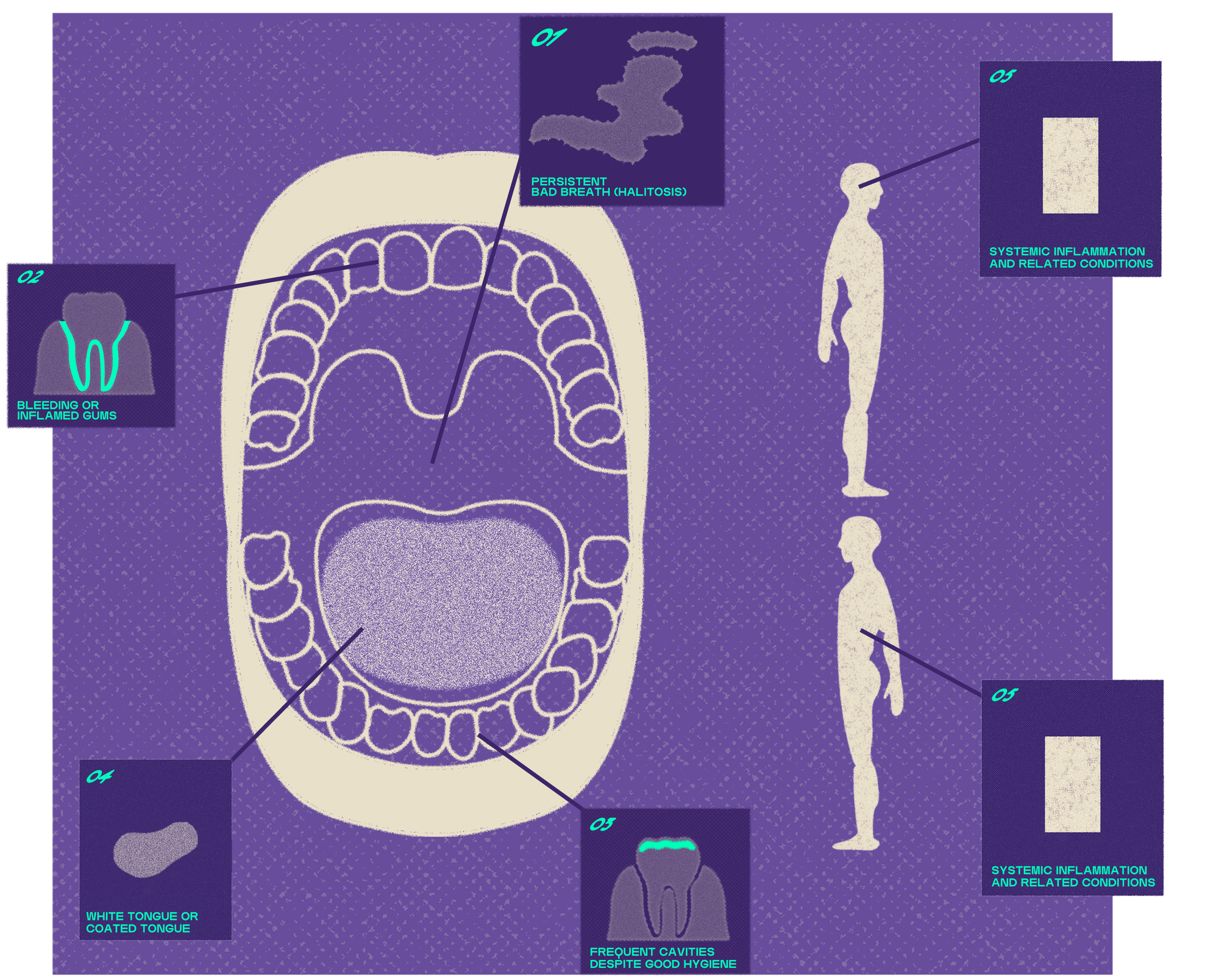
1. Persistent bad breath (Halitosis)
While morning breath is normal, chronic halitosis is one of the earliest signs of microbial imbalance. Anaerobic bacteria like Fusobacterium nucleatum and Prevotella species produce volatile sulphur compounds when digesting proteins, resulting in the characteristic “rotten egg” smell.
What to look for:
☑ Breath that does not improve with brushing or rinsing
☑ Tongue coatings or dry mouth
☑ Patient reports embarrassment or frequent use of mints/gum
What it may signal:
An overgrowth of protein-loving, sulphur-producing bacteria, possibly combined with reduced saliva flow, which is key for maintaining microbial balance.
2. Bleeding or inflamed gums
Healthy gums don’t bleed. Gingival inflammation is often the result of an immune response to dysbiotic biofilms, especially when keystone pathogens like Porphyromonas gingivalis establish themselves.
What to look for:
☑ Red, puffy, or tender gums
☑ Bleeding during brushing or flossing
☑ Localised gum pain or recession
What it may signal:
A transition from a symbiotic to a pathogenic microbiome, increasing systemic inflammation and risk of conditions like cardiovascular disease and diabetes.
3. Frequent cavities despite good hygiene
If a patient maintains decent oral hygiene but continues to develop caries, their microbial makeup — not their brushing technique — may be to blame.
What to look for:
☑ Recurrent decay in the same regions
☑ History of fillings despite regular cleanings
☑ High-sugar or acidic diet with no decay prevention plan
What it may signal:
An overrepresentation of acid-producing bacteria like Streptococcus mutans and Lactobacillus, coupled with a lack of protective, base-producing species.
4. White or coated tongue
A visibly coated or white tongue is often a sign of an imbalanced oral microbiome, especially due to fungal overgrowth like Candida albicans.
What to look for:
☑ Thick white or yellowish coating on the tongue
☑ Bad taste or burning sensation
☑ History of antibiotics use, immunosuppression, or high-sugar diet
What it may signal:
Reduced bacterial diversity, suppressed immunity, and fungal overcolonisation. Also common in patients with gut dysbiosis.
5. Systemic inflammation and related conditions
Because the oral microbiome communicates with the rest of the body, microbial imbalance in the mouth can contribute to or reflect systemic issues.
What to look for:
☑ Patient has type 2 diabetes, heart disease, or Alzheimer’s
☑ Reports of chronic fatigue, brain fog, or gut issues
☑ Family history of inflammatory or autoimmune conditions
What it may signal:
The mouth may act as a reservoir of chronic inflammation and immune dysregulation. Addressing oral microbial imbalance could support broader health outcomes.
Clinical implications
Oral dysbiosis is a medical red flag. By identifying these five signs early, you can:
☑ Recommend microbiome-supportive care (e.g. probiotics, prebiotics, pH-balanced rinses)
☑ Adjust hygiene instructions to avoid microbial disruption
☑ Coordinate with other healthcare professionals if systemic risk is high
Up next: Module 1 Overview