
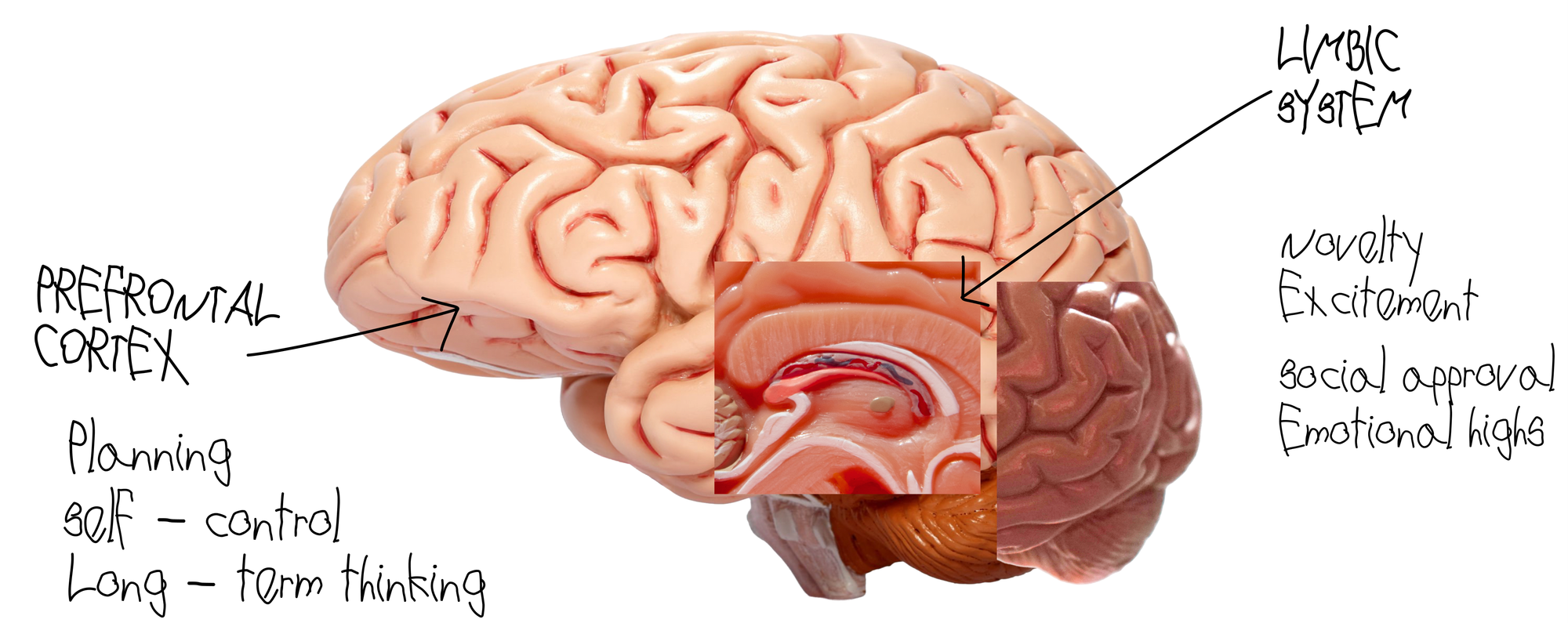
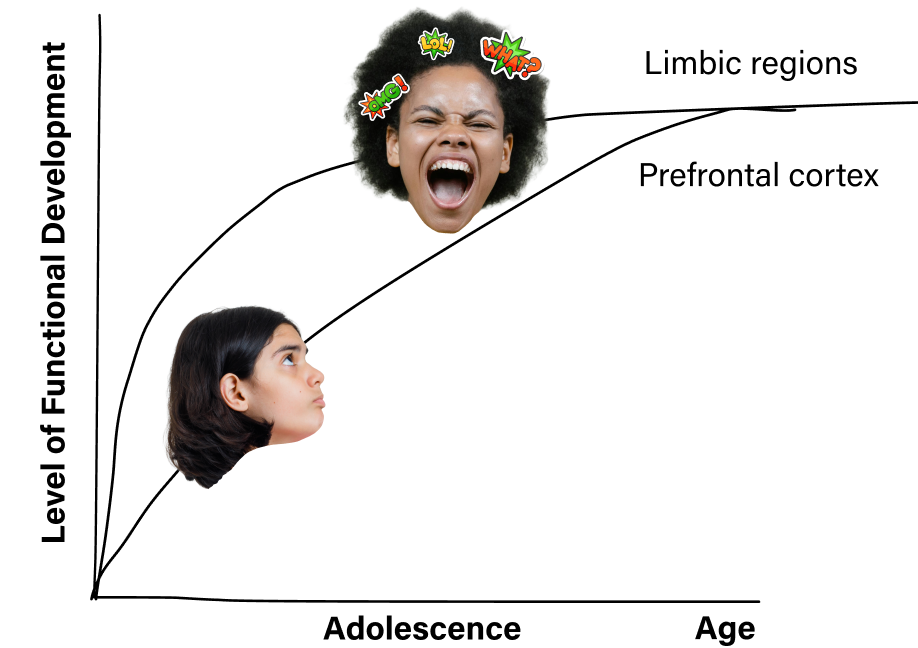
Not only do teenagers have to deal with “raging hormones”, but they are also undergoing major neurological changes! The brain matures from back to front, which means that two of the key brain regions, the limbic system and the prefrontal cortex, develop at different paces.
Limbic system
The limbic system is located deep within the brain and becomes highly active during adolescence. It drives emotional processing, motivation, fight-or-flight responses and has a high reward sensitivity.
Prefrontal cortex
In contrast, the prefrontal cortex sits at the very front of the brain and is responsible for higher-order cognitive functions such as impulse control, planning, and long-term thinking. It develops gradually and does not fully mature until the mid-20s.
Why this matters for oral health
With the limbic system highly active, teens are driven by strong emotions and immediate rewards (e.g. sugary drinks, social approval, risky behaviours). Meanwhile, their neurological tools for weighing risks, delaying gratification, and considering consequences are still developing.
On top of intensified emotional reactions, the teenage brain underestimates risks and overvalues immediate payoff. They are not blind to long-term consequences, but their brains are wired to prioritise instant rewards.
Dr Zuzana Neupauer explains that benefits like “Keep your teeth healthy for life” or “Avoid costly procedures in the future” are not compelling reasons for teens to practice oral hygiene. Instead, try linking their oral care to immediate, personal rewards:
Dive deeper into the science of the teenage brain
The Science of Adolescent Risk-Taking
This workshop report from the Institute of Medicine and the National Research Council dives into the topic of adolescent risk-taking and how it is relevant to health promotion. The third chapter of this report (linked above) expands on the developing teenage brain including enlightening observations on “synapse pruning” which takes place during the teen years based on a “use it or lose it” principle.
The Amazing Teen Brain
This article by prof. Jay N. Giedd presents the teen brain not as an incomplete version of the adult brain, but as a uniquely evolved organ, finely tuned to the demands of adolescence. He emphasises that understanding the developmental trajectory of the teen brain can provide valuable insights into adolescent behaviour.
The Evolutionary Advantage of the Teenage Brain
This easy-to-read article and accompanying video presents the research of Prof. Adriana Galván who explains that the changes in the teenage brain not only contribute to risky or impulsive behaviour but also enable adolescents to adapt quickly to new environments and experiences.
Up next: A struggling teenager or a teenager on the spectrum