
Recommendation
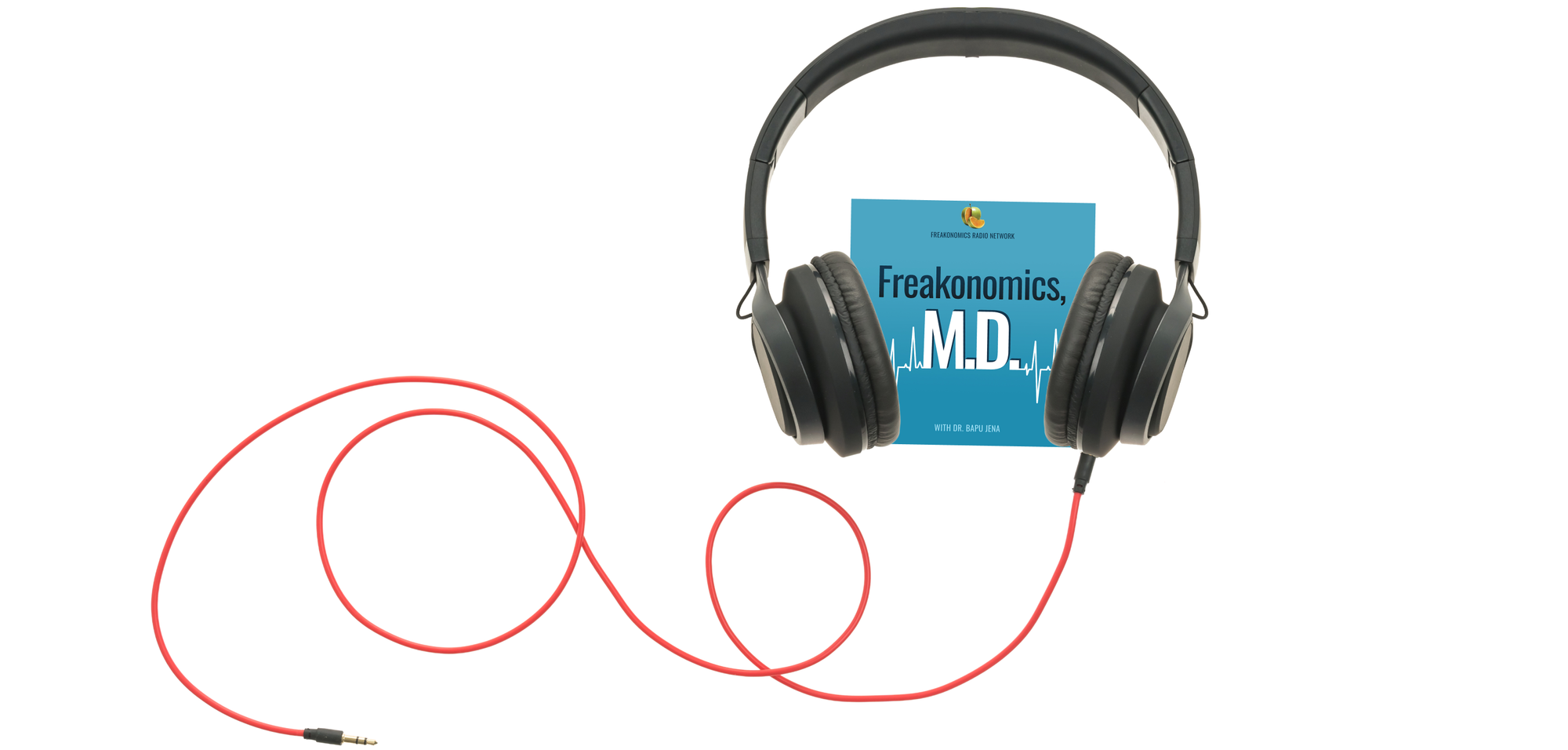
Smoking cessation is an uphill battle. Without their regular dose of nicotine, habitual smokers go through powerful withdrawals. Still, of the 34 million smokers in the United States, most will tell you they want to stop smoking. They know that it’s bad for them; they just don’t know how to quit. The monetary costs of ill health are overwhelming, both to the individual and health care providers. When you consider disease and death, the social costs are even worse. So how do you get people to adopt healthy behaviour? This episode of the Freakonomics M.D. podcast offers an overview of promising, research-backed strategies.
Take-Aways
- Monetary incentives can entice people to stop smoking.
- Monetary incentives are less likely to inspire long-term weight loss, though employing “loss aversion” works for exercise programs.
- Using monetary incentives to change behaviour is less expensive than the alternative, but the practice still faces hurdles.
- Preliminary research suggests that combining gamification, social incentives and loss aversion can motivate people without a monetary incentive.
Summary
Monetary incentives can entice people to stop smoking.
Thorndike’s law of effect suggests that a behaviour is likely to increase when it’s followed by pleasant consequences. With this in mind, researchers have designed programs that provide monetary incentives to help people stop smoking. Each participant received $30 each time they participated in a smoking cessation support call for the duration of the program, and then they got $40 if they were able to go six months smoke-free.
“The researchers verified whether people had smoked with a carbon monoxide breath test or a urine test.”
Unfortunately, even with monetary incentives, only about 22% of the people who were paid to quit smoking actually quit. Still, it’s a higher figure than the control group. Of those who weren’t offered a monetary reward, only 14% were able to quit. In a similar experiment, pregnant women were about 1.5 times more likely to quit when rewarded with money.
Monetary incentives are less likely to inspire long-term weight loss, though employing “loss aversion” works for exercise programs.
If rewarding people with money helps with smoking cessation, could it work for other health-related goals? Research suggests that while monetary incentives can help people lose weight, immediately upon removing the incentives participants tend to revert to their old habits and regain the weight. When it comes to vaccines, people who wanted to get vaccinated did so whether there was a monetary incentive or not, and those who didn’t want to get vaccinated still weren’t motivated by money.
“When it comes to the COVID-19 vaccine, studies of financial incentives suggest that they mostly haven’t helped.”
One study performed by Dr Mitesh Patel and Ascension hospitals employed the concept of loss aversion to motivate patients to exercise. Research participants in the loss aversion group received $42 at the beginning of the experiment, but their accounts were debited $1.40 every time they failed to walk 7,000 steps in a day. The control group simply made $1.40 each time they reached 7,000 steps. The loss aversion group was far more likely to reach their step goal more often.
Using monetary incentives to change behaviour is less expensive than the alternative, but the practice still faces hurdles.
Monetary incentives for smoking cessation make sense from a financial standpoint. Half a million Americans die from smoking-related causes every year, which represents a tremendous social cost and a strain on health care facilities. The financial incentives offered by research studies pale in comparison.
“Smoking costs billions of dollars and hundreds of thousands of lives every year. Paying people to quit may cost more initially, but because it increases the chances they’ll quit, it may actually be cost-effective.”
Still, the practice of offering money for healthy behaviour is controversial. If all smokers get paid to quit smoking, and overweight people get paid to lose weight, people who’ve made healthy lifestyle choices from the beginning would have reason to be upset. Meanwhile, paying everyone to embrace a healthy lifestyle would be prohibitively expensive. Government-provided health care plans like Medicare and Medicaid could start the practice, but commercial insurance providers are unlikely to pay for such programs. People rarely stay with one insurance provider for their entire lives, so the insurance company that invests in smoking cessation would be unlikely to reap the long-term rewards of their investment.
Preliminary research suggests that combining gamification, social incentives and loss aversion can motivate people without a monetary incentive.
Dr Patel wondered if there might be a way to incentivise healthy habits without money. He and his team designed a program that combined loss aversion with gamification and social incentives, to good results.
“Instead of using financial incentives, Patel and his team used social incentives. They had people work together, or against each other, to see if that got people moving.”
Imagine that your whole family is participating in a fitness challenge that involves a point and level system. The family starts with a set number of points, but if one member of that family is far from reaching the day’s fitness goal, the whole family receives a text message. If the family encourages the family member to reach the fitness goal, all is well, but if they fail to motivate him or her, they lose 10 points. Research suggests that this system of social pressure worked as well as money, and that families were more likely to keep up the fitness program after the official challenge ended.
About the Podcast
Freakonomics M.D. is hosted by Dr Bapu Jena, a Harvard professor, physician and economist. He researches health economics and policy.
getAbstract maintains complete editorial responsibility for all parts of this abstract. All rights reserved. No part of this abstract may be reproduced or transmitted or used for training any machine learning system in any form or by any means – electronic, photocopying or otherwise – without prior written permission of getAbstract AG (Switzerland).