
Here are two examples of innocent-looking communication that, if not handled properly, can harm the trust in your doctor-patient relationship.
Case 1: A patient is about to undergo a standard procedure with limited risks, but they have expressed that they are feeling anxious.

Need a little help?
Validate their feelings and show them that you are on their side. Here is an example of what that could look like: “It is completely normal to feel nervous, I see it a lot. This is a standard procedure for us, but I will walk you through each step, so you can ask any questions, and we will take it slow. How does that sound?”
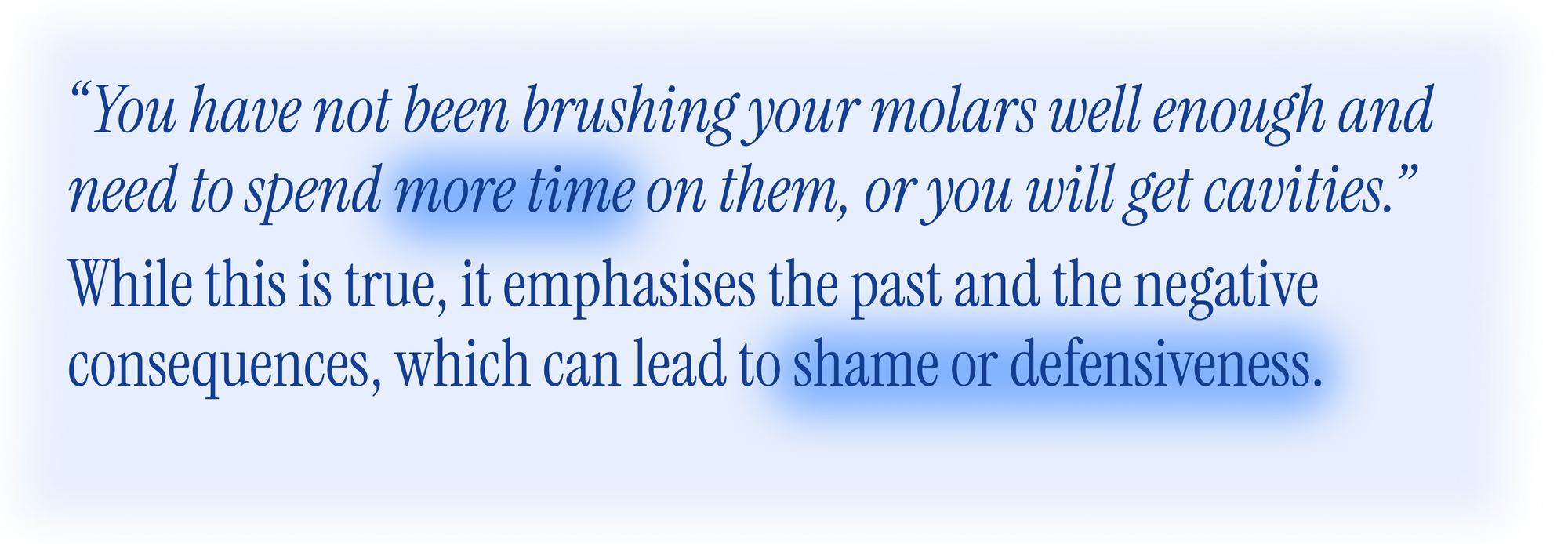
Case 2: It’s apparent that a patient’s molars are at risk due to poor brushing.
Need a little help?
Focus on the future instead of the past, the actionable steps the patient can take to improve their oral health and the benefits these actions will have. Avoid using fear as a motivator. Here is an example of what that could look like: “I notice you have some plaque buildup on your molars. It is very common because they are hard to reach, but if you start your brushing routine by focusing on these areas, it will be easier to give them that bit of extra attention they need.”
Up next: Three communication techniques you can use to support an anxious patient