
Recommendation
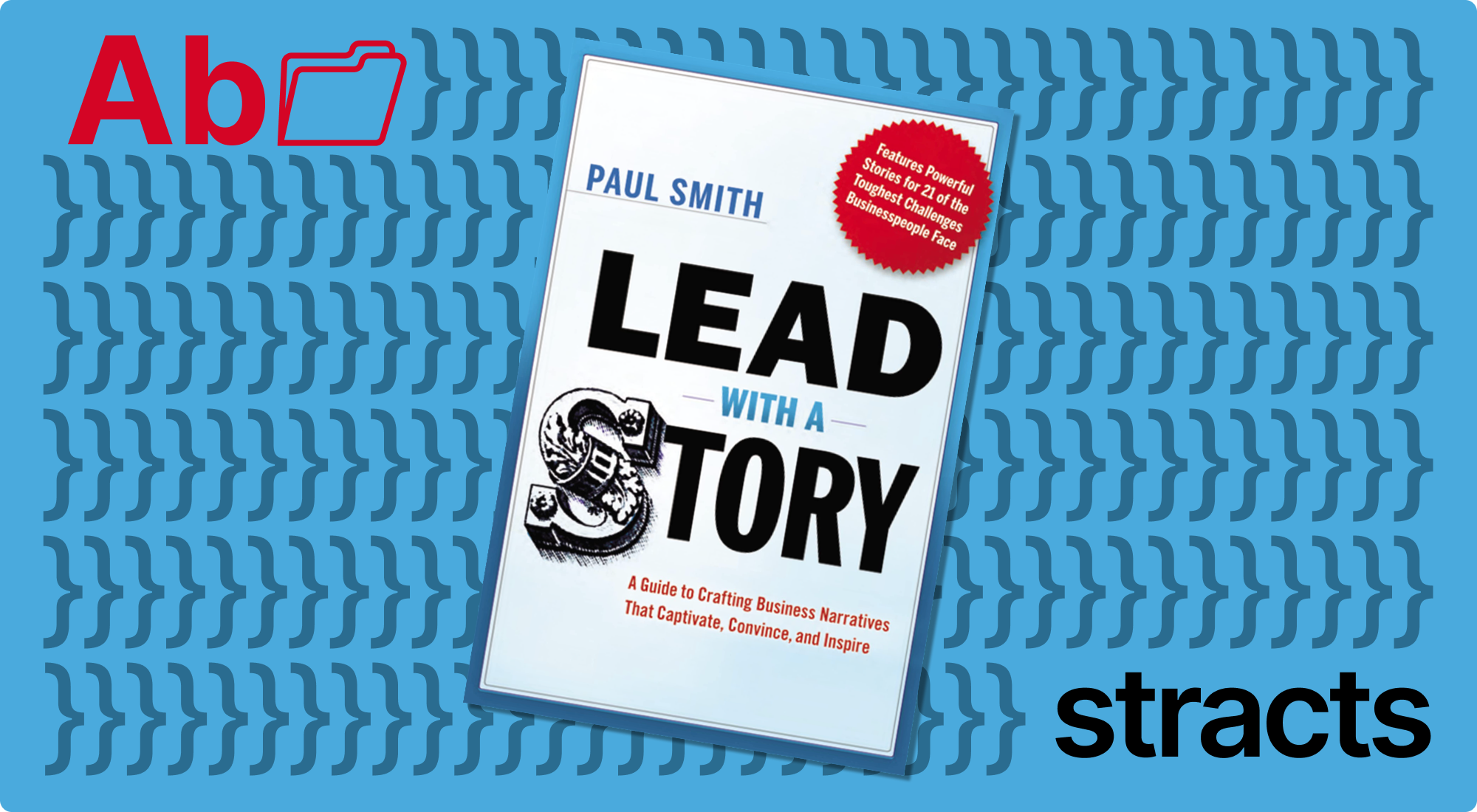
Once upon a time, young manager Paul Smith worked diligently to prepare a slide presentation for the CEO of Procter & Gamble, A. G. Lafley. To Smith’s dismay, Lafley sat with his back to the screen and didn’t glance at the slides, choosing instead to focus solely on Smith. This taught Smith a valuable lesson: A fact-based pitch never works as well as a story. In this helpful manual, Smith offers more than 100 stories readers can use in a variety of business situations. He teaches the basics of storytelling, including examples and exercises. Smith’s easy and absorbing manner draws you into each tale. getAbstract recommends that managers, salespeople and presenters read this charming compilation, from its useful instructions all the way to its happily ever after.
Take-Aways
- Storytelling is the most effective way to compel an audience to listen and engage.
- Tell stories in a conversational speaking style, using short sentences and language that is easy to understand.
- To be effective, stories must connect with the audience members’ emotions.
- Stories are exceptional vehicles for describing your vision, communicating goals, instigating change and earning buy-in.
- Stories illustrate an organization’s values, define its culture and teach acceptable modes of behavior.
- Sharing stories creates bonds and strengthens relationships.
- Stories are wonderful motivational tools and sources of inspiration.
- Stories buoy people’s spirits in the face of failure and reinforce their will to persevere.
- Stories about problem solving, creativity and innovation fuel these capabilities in your target audience.
- Stories can provide nonconfrontational feedback.
Summary
Story Time
One day Jim, a young research and development employee at Procter & Gamble (P&G), decided to change his dull, data-filled monthly memo. He composed a story about Earnest Engineer to present his statistics. The memo was a big hit. Jim’s subsequent memos included such characters as Max Profit, Sella Case and Ed Zecutive. The stories attracted a loyal following throughout the company. Storytelling boosts any communication, even a statistician’s report.
“Experience is the best teacher. A compelling story is a close second.”
Stories are the best way to engage people because they are “simple” and “timeless.” Stories reach all demographics and “all types of learners,” and are “contagious,” easy to recall and inspiring. They fit workplace learning, “put the listener in a mental learning mode” and “show respect for the audience.”
Basic Story Components
The basic components of a story, expressed by the mnemonic CAR, are “Context, Action, Result.” The context is the story’s environment and plot. Context explains:
- “Background” – What is the story’s setting, location and time frame?
- “Subject” – Who is the primary person in the plot?
- “Treasure” – What is that person’s quest or goal?
- “Obstacle” – What impediments does that person face?
“The most important first step to becoming a great storyteller, of course, is to become a storyteller.”
The action is what happens in the story up to the outcome. The message, that is, the reason you told the story or the lesson it shows, lies in the plot’s outcome.
Your Storytelling Style
When telling a story, avoid jargon and opt for a conversational speaking style. Use short sentences composed with simple language. Make your story engaging by using dialogue and characters’ real names. Illustrate your points with analogies and metaphors. Repeat and emphasize words or phrases that capture the story’s essence. To be effective, stories must connect with the audience. Facts and logic always take a backseat to emotions. Several literary devices can help. For instance, the element of surprise is remarkably effective. Evoke the unexpected by including unanticipated candor, an unforeseen twist or result, or an unpredictable ending.
Success Stories
Leaders must inspire their subordinates with a vision of the future. Depict a positive outcome so employees envision themselves as part of a great result in a real, achievable and personal way. To reach their goals, people need specific targets and a sense of accountability and commitment, as shown in these stories:
- A team at Bristol-Myers Squibb made a mock-up of a London Times page with a date in the future. The page featured an article headlining how the team’s strategy made the corporation a “Top-Ranked Global Pharmaceutical Company.” The mock newspaper article was a great vehicle for defining the team’s current strategy and its positive impact on the future of the company.
- Merrill Lynch financial adviser Pledger Monk tells of two people he mentored. A novice adviser asked Monk for guidance. Monk helped him create a point system to track his progress. Tallying points daily immediately helped the newcomer improve his performance. A few months later, Monk added another rookie adviser to the point system. The healthy competition boosted both junior consultants’ productivity.
- West Point graduate Bob McDonald tells this story to illustrate commitment. When he was on his way to class, a classmate splashed mud on him. An upperclassman reprimanded McDonald for his messy uniform. His only allowable response was, “No excuse, sir. It won’t happen again.” The “no excuses” philosophy stuck with McDonald throughout his career.
“A well-told business story isn’t the same as a romance novel or a Hollywood movie. It has a simpler structure.”
Stories gain buy-in from an audience, whether they inspire change or highlight a facet of a company’s work. To challenge listeners’ assumptions, to encourage them to draw the same conclusions you’ve drawn or to show the value of their efforts, tell stories like these:
- When legendary CEO Jack Welch came onboard at General Electric in the early years of the 1980s, its leaders assumed they would continue to receive orders to build nuclear reactors. Welch realized that after the Three Mile Island debacle commercial interest in nuclear energy had waned. He administered a harsh “reality check” to shock managers into altering their plans. He told them, “You’ll never get another order for a nuclear reactor in the US.” The company retooled its business model, and Welch’s foresight proved correct.
- Alltel Corporation CEO Scott Ford once made a presentation to a private equity firm in New York. He cited the image of a man hailing a cab in Manhattan to underscore the importance of timing in deciding when to sell a company. A year later, when the equity firm’s partners were considering a buy-out offer, one executive remarked, “This is the yellow cab, isn’t it, Scott?” Ford’s metaphor had left its mark.
- Ray Brooks, a member of National Car Rental’s Emerald Aisle Club, uses this story to show the importance of customer service. Brooks arrived at Oregon’s Portland International Airport with a full schedule of local appointments. When he attempted to rent a car, he discovered his driver’s license had expired. To his surprise, the National Car Rental agent offered to drive him to his appointments and then to the Department of Motor Vehicles to update his license. It took two tries, but he got his license renewed. Years later, Brooks tells this tale to evoke what extraordinary service looks and feels like.
Corporate Culture Stories
Stories define a company’s culture. Tales of a manager encouraging a mother to leave work early to attend her child’s soccer game define the standards of behavior that make up company culture better than any organizational handbook. Stories that reflect a firm’s principles have a greater impact than official value statements, no matter how carefully crafted. Identify your organization’s guiding beliefs and seek stories that exemplify them or even those that show what happens when employees violate the rules:
- Procter & Gamble employee Rasoul Madadi and his family were trapped in Egypt when protests erupted in Cairo in 2011. P&G’s home office and its travel team worked around the clock successfully to get the Madadis on an outbound flight. Hundreds of other expats spent days stuck in the Cairo airport with little help from their companies.
- The CEO of a new grocery store chain issued a policy that employees were to park in the back of the lot, leaving the spaces near the store for customers. The dictum carried more weight after a story circulated that the CEO got soaked dashing through a downpour because he followed his own policy and parked far from the entrance.
- Despite warnings in the employee manual, two P&G staffers snuck into the cafeteria in P&G’s Polk Building to take advantage of the free lunch provided for trainees. They got away with it once, so they kept coming back until cafeteria workers grew suspicious. The freeloaders’ manager summarily fired them. The story spread so widely that P&G employees now refer to being fired for inappropriate behavior as being “polked.”
Inspirational Stories
Stories are wonderful motivational tools. Tales of ordinary people overcoming extraordinary obstacles never fail to inspire. The next time your team members face a challenge, share the following stories about overcoming failure and persisting in the face of obstacles:
- Tanzanian marathon runner John Stephen Akhwari was competing in the 1968 Summer Olympics in Mexico City when he fell and suffered a bad injury. In spite of his pain, he completed the race an hour after the last competitor had crossed the finish line. When he limped across the finish line, he explained, “My country didn’t send me 5,000 miles to start this race. They sent me 5,000 miles to finish it.” Akhwari’s determination earned him the unofficial title of “King without a crown.”
- The history of Pringles potato chips provides a case study of perseverance. Pringles was a huge success when P&G introduced it in the mid-1970s. However, sales began to drop over the next few years. To slow the decline, P&G made major changes to Pringles’ taste, advertising and price. By the late 1990s, Pringles was back on top.
Teachable Moments
Stories about failure teach people what not to do. “Two-roads” stories illustrate how choices affect a company’s image and its results. Take the tale of two first-time managers, Barry and Mike.
“An organization’s culture is defined by the behavior of its members and reinforced by the stories they tell.”
Barry was thrilled to have his own office and staff, but when Sally, the accounts receivable manager, stopped by to introduce herself, Barry asked her to bring him a cup of coffee. The story quickly spread, and Barry gained a reputation as a chauvinist before the end of his first day. On the other hand, Mike – a new manager at a P&G satellite office in Seattle – did not want to displace anyone from the facility’s few desks or cubicles, so he set up and worked from a card table in the kitchen. This action earned him his team’s respect before he even started to work.
Learning From Feedback
People learn through feedback, yet hearing and absorbing criticism can be difficult, even when the criticism is constructive.
“Turn your ideas into their ideas by taking your audience on your discovery journey through story.”
Well-constructed stories deliver feedback in such a way that recipients don’t feel attacked. To offer feedback that is not confrontational, follow five steps:
- Begin by saying something positive about the person’s work.
- Verify that a problem exists.
- Ask if the staffer is addressing the issue and in what way.
- State your willingness to lend a hand.
- Tell the employee that you appreciate the improvement because he or she is “far too valuable to let this kind of thing happen.”
Telling Problem-Solving Stories
You can solve problems by changing the pattern of your thinking, looking for examples from outside your organization or breaking a big task into smaller components. Consider these tales:
- Management asked P&G engineers to develop a better detergent formula for removing laundry stains without damaging fabrics. When the engineers redirected their focus from removing dirt to locating chemicals that prevent dirt from adhering to cloth, they found several viable solutions.
- When best-selling author Margaret Parkin was a young girl, she wanted to knit a sweater with a sunflower pattern. Her mother gave her a bag of leftover wool, but when Parkin saw the tangled bundle, she exclaimed, “It’s hopeless.” Her mother showed her how to patiently untangle one knot and move on to the next. Soon, Parkin had several neatly balled skeins of yarn in many different colors that she could use to knit her sunflower sweater.
Common Barriers
You’ll become a better storyteller the more you practice. Don’t let these barriers get in your way:
- “I don’t know where to find good stories” – Make a note when you hear a good story and consider how you could use it in your business. Sift your own experiences to find treasured story nuggets. Carefully observe life and extract stories from what you see around you.
- “I have trouble remembering the stories when I need them” – Write down stories as you hear them. Create a database of your favorites.
- “I’m not sure where to tell my stories” – Tell your stories wherever conversations take place, including formal or informal business settings.
- “I don’t think stories belong in a formal memo or email” – Stories are always more engaging than facts and figures. Use them in any business setting.
About the Author
Paul Smith, a public speaker and leadership coach, is director of Consumer & Communication Research at Procter & Gamble.

getAbstract maintains complete editorial responsibility for all parts of this abstract. All rights reserved. No part of this abstract may be reproduced or transmitted or used for training any machine learning system in any form or by any means – electronic, photocopying or otherwise – without prior written permission of getAbstract AG (Switzerland).