
Now, let's learn from experience. Watch this video with Dr Beáta Polivka Marčanová, who shares the hard-won lessons from her career as both a paediatric dentist and communication specialist.
0:00
/8:44
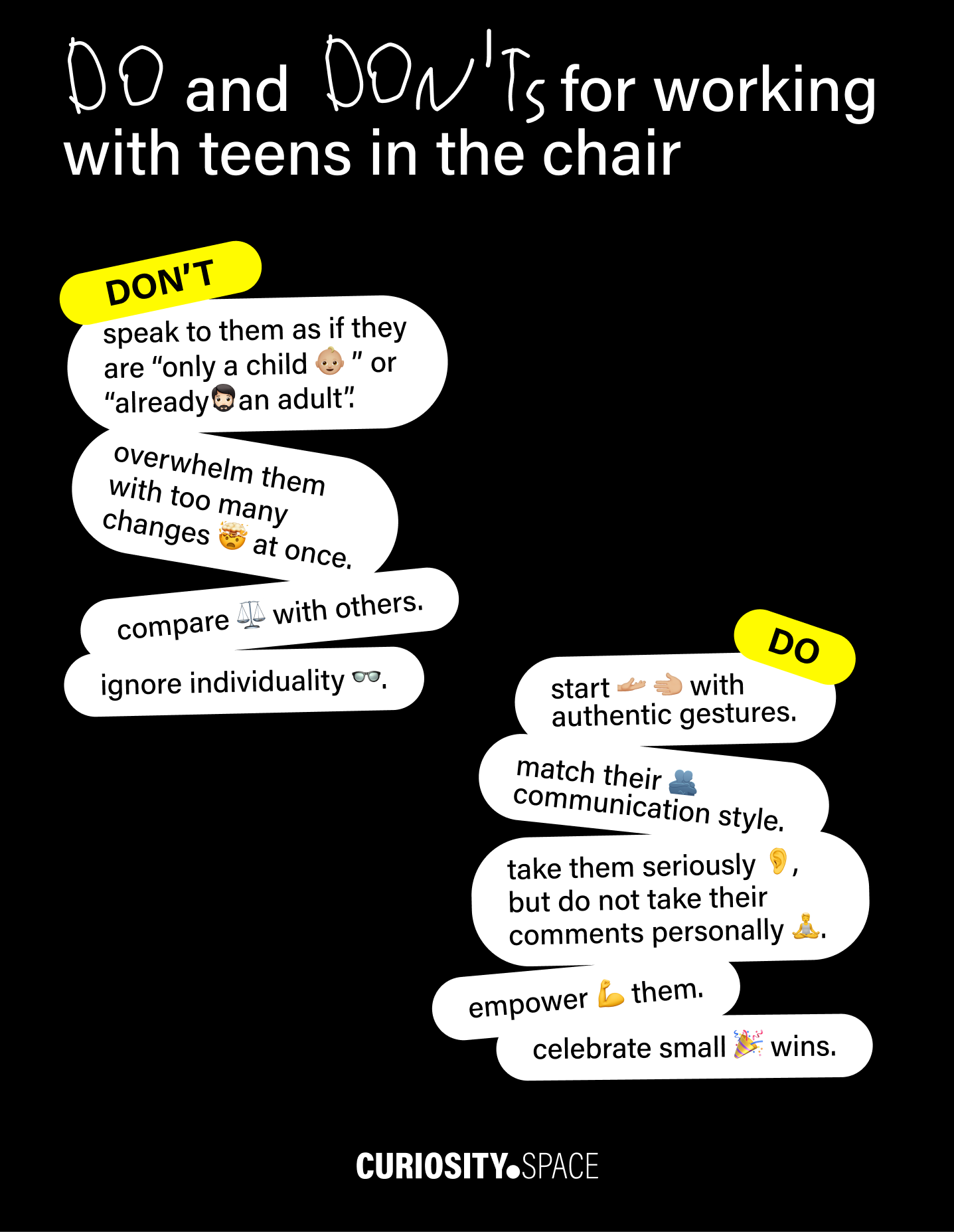
DOs and DON’Ts for working with teens in the chair
DON’T
- Speak to them as if they are “only a child” or “already an adult”. Teenagers are in a unique in-between stage, and a 13-year-old might need very different communication than a 17-year-old. The key is to listen closely and adapt your communication style to match their developmental stage and individual needs.
- Overwhelm them with too many changes at once. Introducing many new tools at once (e.g. interdental brushes, a sonic toothbrush, and a new tracking app) will lead to frustration and poor compliance.
- Compare with others. “Your sister had no cavities,” or “you are much quieter than your brother,” might be said with good intentions. But most comparisons will lead to shame, or make the patient feel like they are not enough.
- Ignore individuality. Every teen is different, and adapting the treatment to their personal needs is important. If you secretly think that “all teenagers are the same,” it will show in your communication and undermine trust.
DO
- Start with authentic gestures: Be curious about them. Notice their style, ask about their interests. This helps to break the ice and sets the tone that you see them as an individual.
“Sometimes humour works wonders — it makes dental visits feel less clinical and more personal.”
— Dr Bea Polivka Marčanová
- Match their communication style. Some teens want to chat, others want short, clear answers. Adapting to their communication style prevents resistance.
- Take them seriously, but do not take their comments personally. Teens are going through a lot and might react immaturely or dismissively. By reminding yourself not to take it personally, you will be able to keep your focus on meeting their needs during the appointment.
- Empower them. Frame advice around autonomy:
“These are your teeth, and you have the power to keep them strong.”
“With just a few minutes a day, you stay in control and avoid unnecessary problems.”
- Celebrate small wins. Praise effort, not just results. Oral care is a journey, and teens respond to positive reinforcement.
For quick recall, we've condensed the essential DOs and DON'Ts into a simple, one-page visual. Download or print this page so you can refer to it anytime you need a reminder.
Up next: Balancing teen independence with parental support