

Recommendation
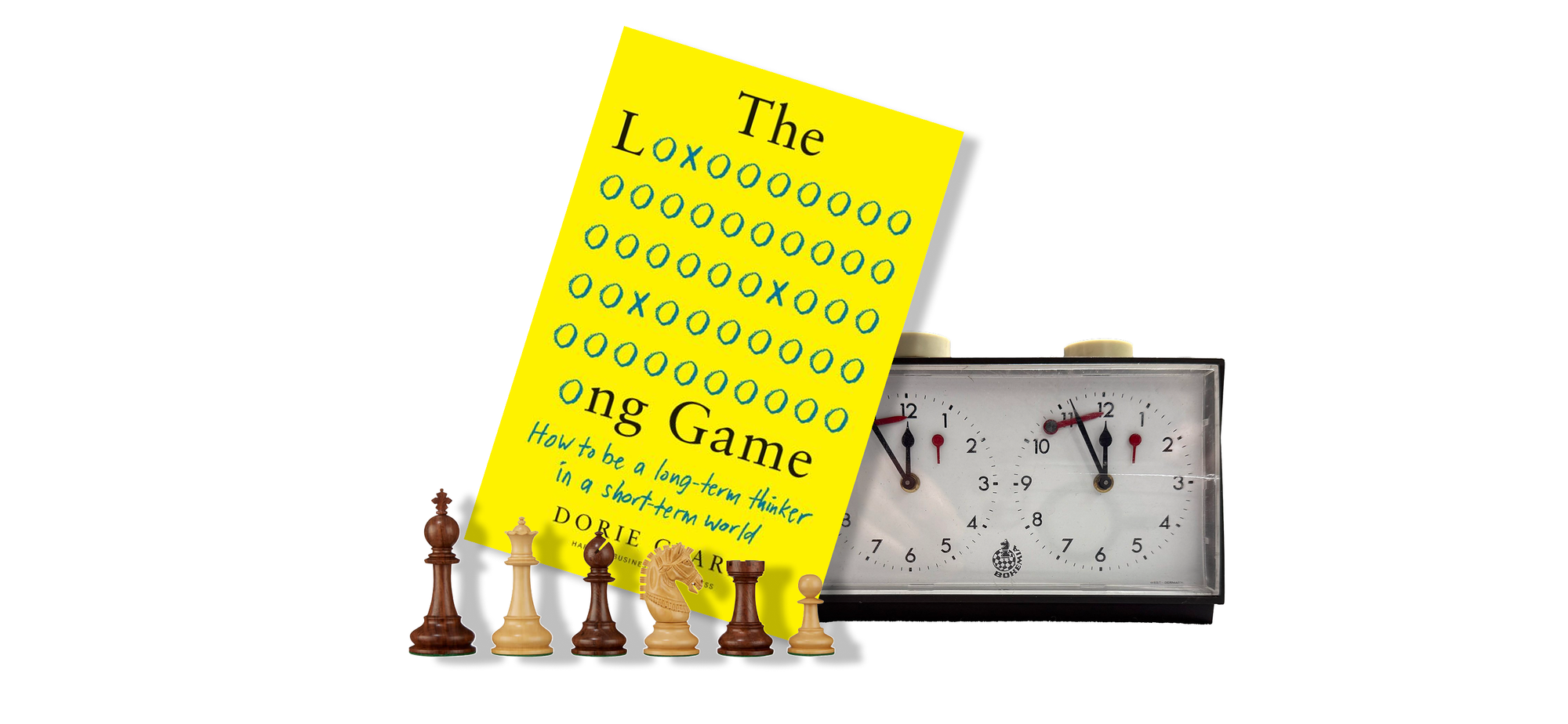
Short-term thinking helps you deal with immediate crises. To achieve long-term strategic goals, however, you’ll need to carve out time from your hectic schedule and break free from perpetual crisis management. Only then can you create breathing room to craft long-term strategic change. In this Talks at Google video, best-selling author of The Long Game, Dorie Clark, outlines six practices to help you become a long-range, strategic thinker to advance your business, career and personal life.
Take-Aways
- Short-term thinking is valuable in a crisis, but long-term thinking is necessary for strategic goal setting.
- To cultivate long-term thinking, create some “white space” in your days – and know when to keep your head down to work and when to look up to seek new opportunities.
- Be encouraged by small signs of progress and avoid getting bogged down in the tyranny of “urgent” tasks.
Short-term thinking is valuable in a crisis, but long-term thinking is necessary for strategic goal setting.
The Management Research Group once asked 10,000 senior executives what was most vital to business success. A whopping 97% replied that strategic thinking was crucial. In a similar study, however, 96% of surveyed executives claimed not to have time for strategic thinking.
“We do not want to lose by winning at the wrong thing.”
Futurist and author Jonathan Brill has said, “In corporate life, the worst thing that we can do, the worst mistake we can make is to take a group of smart, talented, competent people and tell them to win at the wrong thing – because the problem is they will do it.” Though short-term thinking is valuable when dealing with a crisis, strategic, long-term thinking is necessary to get your team focused on the right goal. So how do you go about recalibrating from short-term to long-term thinking after a crisis?
To cultivate long-term thinking, create some “white space” in your days – and know when to keep your head down to work and when to look up to seek new opportunities.
There are six ways you can spur long-term, strategic thinking. First, commit to creating some “white space” in your days. Of course this is a massive challenge for most professionals in a culture where they’re trying to do 120% of the work in only 100% of the time. Luckily, creating white space “is a battle that can be won in the margins.” Sometimes the difference between peace and total cognitive overwhelm emerges from just an hour or two a week. Free up time by continually tightening your criteria for the activities you agree to, and working more efficiently when you do agree to something.
“Maybe if you keep having a bunch of people that want career advice, instead of meeting with them one-on-one once a month, you could have a coffee hour, where you bring multiple people together.”
Second, it helps to distinguish between “heads up” time, when you can look up and make conscious choices, and “heads down” time, when you focus exclusively on work tasks. During the COVID-19 crisis, you likely experienced a lot of heads down time, but now that there may be more room to breathe, you can get back to discretionary activities, like professional development or networking.
Third, take a tip from Google’s early days, and try to claim “the elusive 20% time” for experimental activities unrelated to your main job. Though many busy Googlers no longer avail themselves of this time, it pays to remember that many of Google’s most valuable products emerged from 20% time. Even if you’re not doing “earth-shattering, high-level stuff,” it can lead to connections and relationships that provide you with new opportunities and help keep you engaged and interested.
Be encouraged by small signs of progress and avoid getting bogged down in the tyranny of “urgent” tasks.
The fourth tip for encouraging long-term, strategic thinking is to remember that many successes are first marked by a “deception phase,” when progress is nearly invisible to those who aren’t paying attention. This concept applies to new technologies that will someday be adopted on a large scale, and it also pertains to long-term goals in your career. You’ve got to keep the faith and watch for small signs of progress.
“In our own professional lives, we need to think more about how we can place a minimum viable bet and gather more data.”
By the same token, it’s valuable to rethink failure. Consider the person who goes to the casino and loses $100,000. That’s a failure. Now consider the person who places 10 $1 bets, ultimately losing all $10. That’s less a failure; it’s more gathering data.
Fifth, approach your career the way lean start-ups approach a new product: Create a minimum viable product, then put it out there to gather data. This will help you make more informed career choices. Finally, when designing your career, don’t lose your overarching vision by getting caught up in small, daily tasks. Ask yourself, “What kind of person do I want to be?” Your answer may lead you to some unexpected but valuable experiences.
About the Speaker
Dorie Clark teaches at Duke University’s Fuqua School of Business and has been named one of the Top 50 business thinkers in the world by Thinkers50. She is the best-selling author of Reinventing You; Stand Out; Entrepreneurial You; and The Long Game.

getAbstract maintains complete editorial responsibility for all parts of this abstract. All rights reserved. No part of this abstract may be reproduced or transmitted or used for training any machine learning system in any form or by any means – electronic, photocopying or otherwise – without prior written permission of getAbstract AG (Switzerland).