
As we have seen, patients don’t always voice their fears or worries directly. Emotional distress often shows up in subtle or unexpected ways – both verbal and non-verbal.
Here are five signs to watch for:
- They are unusually quiet
A patient who is overwhelmed may withdraw or avoid conversation altogether. - They are asking a lot of questions
Repeated questions can be a sign of anxiety or a need for reassurance and control. - Agitated or irritable behaviour
A patient who seems unfriendly, short-tempered, or defensive may be masking fear or shame. - Physical signs of anxiety
Look for restlessness, trembling, rapid breathing, or visible tension in their body. - Closed-off body language
Hunched posture, crossed arms, or avoiding eye contact often signal discomfort or vulnerability.
If you notice any of these behaviours, take the time to ask your patient about it. Making assumptions can lead to misunderstandings, so it is important to remember that we can’t truly know how someone else is feeling unless we ask.
Psychologist's recommendation: Ask a few simple, open-ended screening questions at the start of each appointment, even if you don’t notice any obvious signs of distress in your patients:
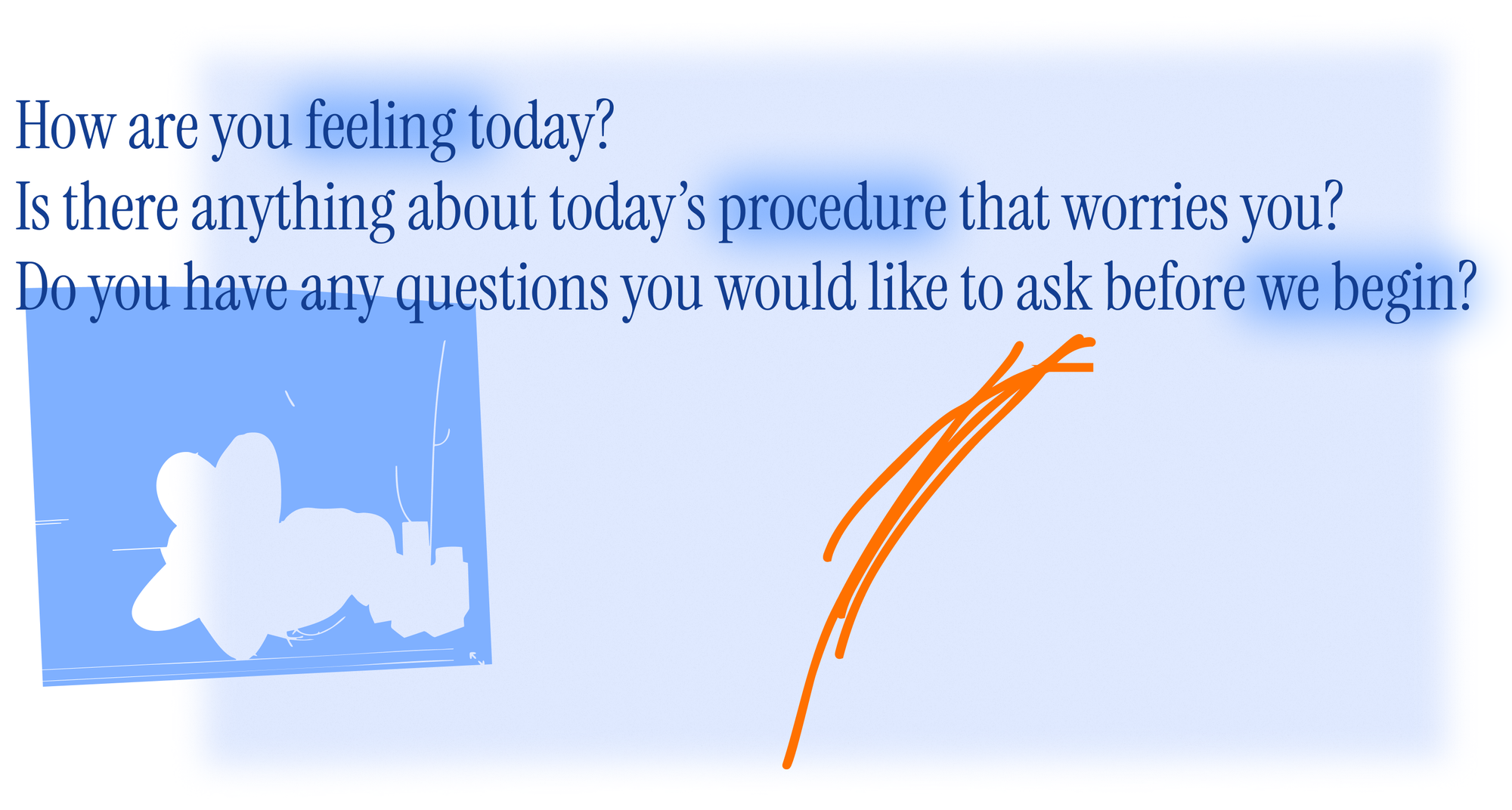
In doing so, you create space for the patient to share their feelings, allowing you to adjust your care to their needs.
Dive deeper
Why are people afraid of the dentist? Observations and explanations
This paper explores peer-reviewed literature on the complex reasons behind dental anxiety, including both learned experiences and individual predispositions. It offers valuable insights for dental professionals seeking to better understand the roots of patient fear and how to address them with empathy and care.
Fear and the defence cascade: Clinical implications and management
This article, published in Harvard Review of Psychiatry, delves into the "defence cascade," the sequence of innate, automatic responses humans exhibit when faced with perceived threats. Although the article is primarily aimed at clinical therapists, it remains a valuable resource for anyone seeking a deeper understanding of the famous fight, flight, or freeze responses.
Shame anxiety, stigma and clinical encounters
In this paper, Prof. Luna Dolezal discusses the intricate relationship between shame, anxiety, and stigma within healthcare settings. She introduces the concept of “shame anxiety” as the chronic anticipation of shame that is experienced by individuals living with health-related or health-relevant stigmas. The article emphasises the need for healthcare professionals to adopt a "shame-sensitive" approach to better understand and mitigate the impacts of shame and stigma on patient care.
Up next: Share your experience