
Case contributor: Sabina Floridia, RDH and iTOP lecturer
Even with excellent brushing habits, gum inflammation can still develop if interdental biofilm is left undisturbed. Biofilm matures especially quickly between the teeth, driving chronic inflammation that can extend beyond the mouth. However, daily interdental brushing can significantly reduce inflammation in just one week, serving as a frontline tool in preventing both oral and systemic diseases.
Initial assessment and diagnosis
The patient is a 62-year-old healthy male with generalised gingivitis, despite a low plaque index and good brushing habits. The main contributing factor was undisturbed interdental biofilm caused by the absence of daily interdental cleaning. This was reflected in a high interdental bleeding index: a BOB score of 72% (the percentage of interdental spaces that Bleed On interdental Brushing). There were localised tartar deposits and some open interdental spaces with gingival recessions, not associated with periodontitis. The patient was diagnosed with generalised plaque-induced gingivitis, primarily due to a lack of interdental biofilm disruption.
Patient information
| Gender: male |
| Year of birth: 1962 |
| Medical history: Non-smoker, no medications, systemically healthy |
| Oral hygiene habits: Brushes twice daily with good technique; does not perform any interdental cleaning |
| Chief complaint: Visible tartar deposits |

| Clinical findings at baseline (T0) | |
|---|---|
| Plaque index | Low (<15%) |
| Tartar | Present in the 5th sextant |
| Interdental bleeding index (BOB) | 72% |
| Other observations |
|
Treatment plan and intervention
Step 1: Motivational interviewing and biofilm visualisation
- The disclosed biofilm is shown to the patient as a visual aid
- Patient education on interdental inflammation
Step 2: Personalised instruction (iTOP Methodology)
- Calibration of interdental spaces
- Prescription of three Curaprox CPS brush sizes (06, 09, and 405)
- Hands-on training on proper insertion, angle, and daily use
Step 3: Phased prophylaxis
- Due to the time required for education and training, only partial cleaning was completed during the first visit
Step 4: Follow-up (T1):
- A control appointment was scheduled one week later to assess inflammation, evaluate compliance, and complete the entire prophylaxis:
Following personalised instruction using the iTOP (Individually Trained Oral Prophylaxis) approach, the patient’s interdental bleeding index (BOB) dropped dramatically — from 72% to just 7% in one week.
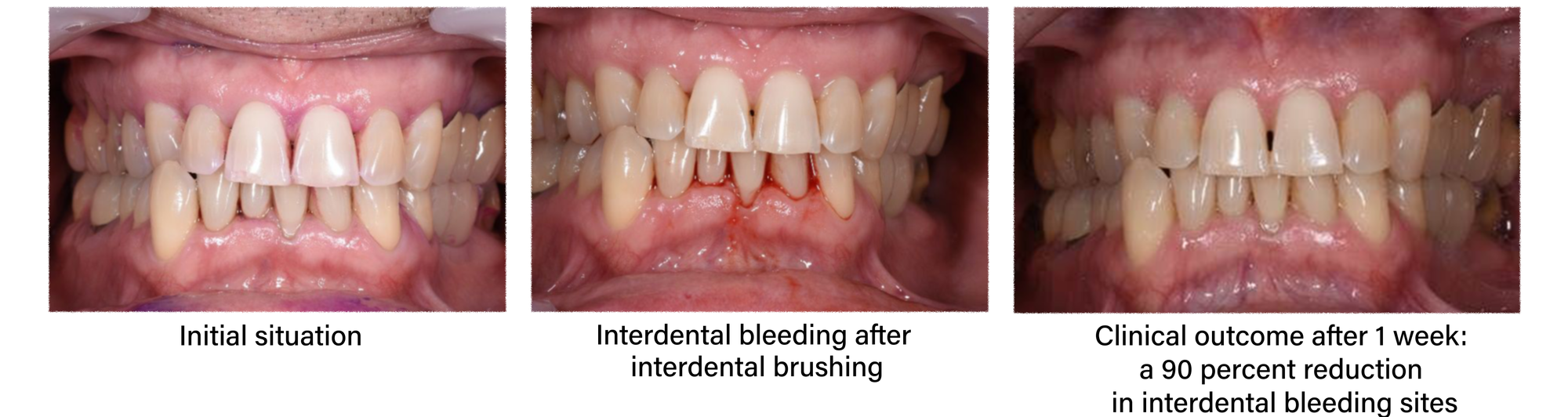
Because a significant portion of the initial visit was dedicated to education and hands-on training, full prophylaxis was completed at the follow-up appointment. At this session, the patient reported excellent compliance with daily interdental brushing, experienced no discomfort, and expressed both increased confidence and surprise at how quickly his gum health improved.
Conclusion
Reducing oral inflammation is a frontline strategy for improving systemic health. Without personalised instruction and motivation, patients often neglect interdental hygiene. But when interdental biofilm is consistently removed, inflammation decreases rapidly, reducing not just oral symptoms, but also the potential systemic inflammatory burden.
Up next: Let us know