
Recommendation
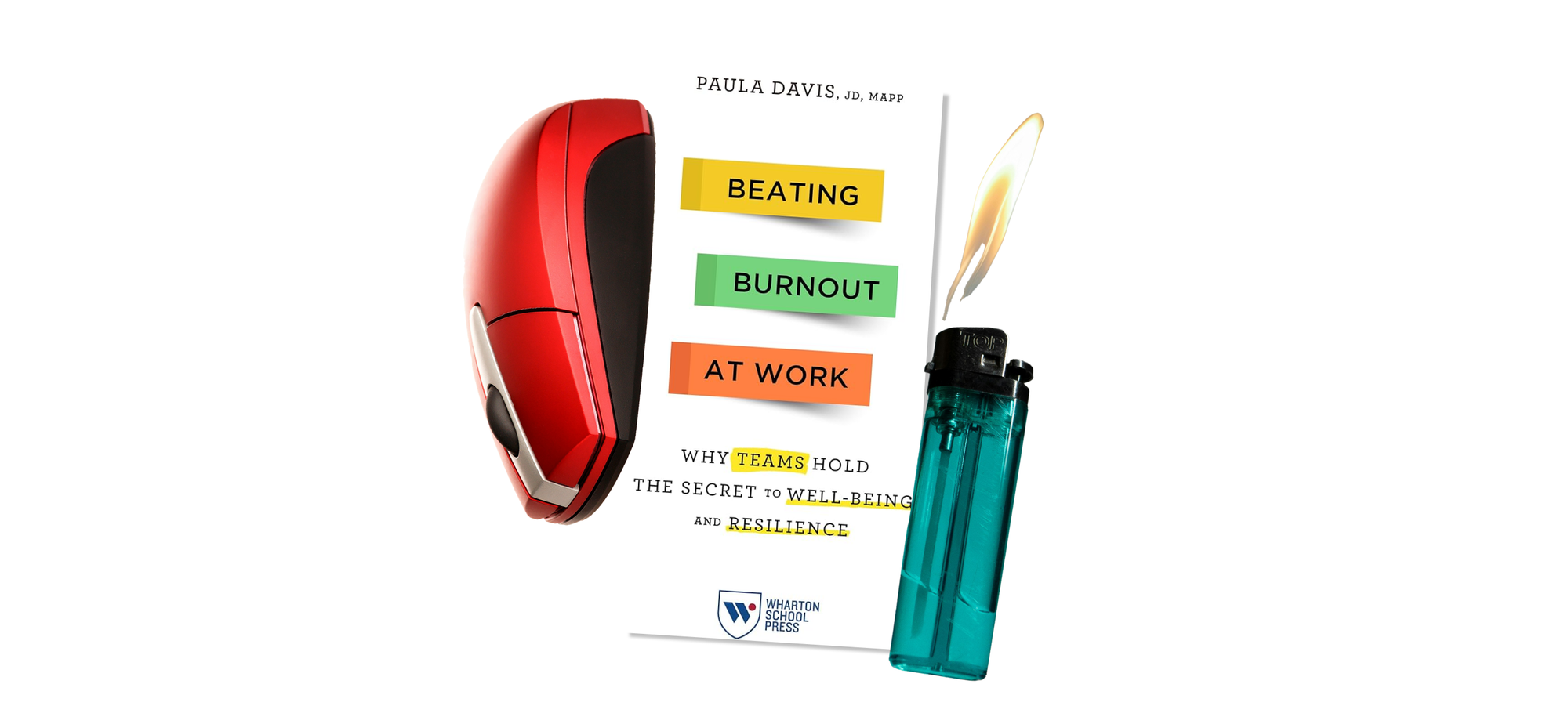
Are you feeling burned out? You’re far from alone. In this helpful book, Paula Davis, an expert on burnout, presents the causes of work-related stress and discusses how to mitigate its damage. Organizations and individuals can reduce burnout, she argues, by making minor adjustments to their mind-sets, schedules and workflows. Davis suggests assessing what’s important to you and analyzing your schedule. If you spend less than 20% of your day on tasks you’re passionate about, you’re vulnerable to burnout. By adjusting your daily to-do list, however, you can immunize yourself against exhaustion.
Take-Aways
- Burnout is epidemic.
- Organizations can minimize burnout’s costs.
- Control burnout by tapping into the “power of teams.” Follow the acronym PRIMED.
- Psychological safety underpins the team approach.
- Relationships can make or break worker experiences.
- Impact is all about meaning.
- You can develop mental strength.
- Energy – especially positive energy – can inoculate you against burnout.
- Design can create a framework for positive energy throughout the organization.
Summary
Burnout is epidemic.
The military coined the acronym VUCA – volatile, uncertain, complex, ambiguous – to describe the nerve-jangling fog of war. Civilians also struggle to adapt to a world of unceasing change and ever-increasing demands. Burnout hits workers in all sectors, including finance and technology. In the case of physicians, burnout threatens the health of not only the doctor suffering from work fatigue, but his or her patients, too. Burned-out doctors are more likely to commit medical errors.
“Burnout is more than feeling tired because you’re working on a big project or because you’re in the middle of your busy season.”
Three symptoms characterize burnout:
- Extreme fatigue – Chronic work stress can leave you exhausted, physically and emotionally. Physical manifestations often include headaches, insomnia and chronic pain. Psychological symptoms might include anxiety and depression.
- A jaded outlook – Burnout victims become more cynical and less empathetic. Colleagues and customers become a source of annoyance rather than inspiration. Irritability, absenteeism and a fear of interacting with others are telltale signs of burnout.
- Defeatism – Burnout kills passion and drive, leaving sufferers with a sense of apathy.
Organizations can minimize burnout’s costs.
Work fatigue is common in health care jobs. The Mayo Clinic in Minnesota created the Listen-Act-Develop framework, and, with it, made strides in reducing burnout syndrome among its practitioners. The US Army developed its Comprehensive Soldier and Family Fitness (CSF2) program to identify signs of burnout and to address the problem. One noteworthy tactic in CSF2 is its “train the trainer” initiative: Soldiers who complete resilience training return to their units and train their colleagues.
The Mayo Clinic and the army shared certain tactics in tackling burnout:
- They acknowledged the issue – Many organizations ignore workers’ mental health struggles. That’s not as easy to do in high-stress environments like war and medical care. The army and the Mayo Clinic accepted the issue, and assessed the problem. Both created methodologies for measuring burnout.
- Leaders led – Executives and officers at the highest levels embraced their organizations’ new focus on assessing and preventing burnout. Leaders acknowledged their roles in intensifying or minimizing stress. At Mayo, a one-point increase in a boss’s overall leadership score led to a 3% reduction in burnout.
- They deployed “science and stories” – The army tapped the expertise of a research group at the University of Pennsylvania – one of the few institutions conducting peer-reviewed burnout research. Stories can be powerful, too: Soldiers who open up about their struggles with mental health inspire others to achieve self-awareness, seek professional help, and develop effective and healthy coping mechanisms.
Control burnout by tapping into the“power of teams.” Follow the acronym PRIMED.
A team is a group of two or more people focused on accomplishing a goal. Teams, typically, coalesce for a few weeks or months, then break apart. Team members then reform into new groups to pursue new projects. Effective teams communicate and form self-directing groups that achieve goals. When they function well, teams suffer lower levels of work-induced stress, and fewer instances of burnout.
“Teams are powerful entities within organizations and underutilized when it comes to burnout prevention. ”
The acronym PRIMED – psychological safety, relationships, impact, mental health, energy, design – sums up the magic of teams:
Psychological safety underpins the team approach.
People need to feel a sense of belonging and social comfort at work. Teams can provide this support network. Feeling psychologically safe allows employees to bring their true selves to work. They can speak honestly, take risks and disagree without fear of punishment. Psychological safety offers benefits to the larger organization. A team in which members voice dissent is more likely to spot problems early, and to address them before they metastasize into major issues.
“It matters enormously to your well-being that you can show up as yourself to work and be seen.”
Several factors create an environment of psychological safety. These “ABCs” of psychological safety include the following:
- Autonomy – Workers report less burnout when they have control over their decisions and play an active role in the final outcome.
- Belonging – This is the feeling that you are part of a larger group and play an important role in accomplishing a mission.
- Competence – This is the sense that you improve over time as you add skills and accomplishments.
Relationships can make or break worker experiences.
Strong interpersonal networks can boost resilience and satisfaction. An employee who lacks strong relationships at work can fall into loneliness. Lonely workers are less productive, less happy and less loyal. Workers with strong relationships report higher levels of job satisfaction. Interpersonal relationships are a factor in employee retention. Some teams struggle with an inability to have tough conversations. Many organizations promote a “culture of nice”; no one wants to go near touchy topics such as work-induced stress. Discussing difficult topics in constructive ways is crucial for team functioning, however.
“One thing that COVID-19 has exposed is how important in-person connection is at work and to teams.”
The pandemic disrupted the normal modes of relationship-building. With many teams going virtual, managers must encourage and maintain connections without face-to-face contact. They can accomplish these tasks in a number of ways:
- Communicating frequently about team goals.
- Celebrating victories – whether small wins or major milestones.
- Providing regular feedback.
- Striving for transparency – give team members a heads-up about any shifts in strategy or other changes.
- Stressing the team’s shared goals.
Impact is all about meaning.
Teams need to feel passionate about the importance of their work. Many employees show up for more than a paycheck. They work for a sense of meaning: the feeling that what they do connects to their values, and that they make a difference. Meaning and motivation are two sides of the same coin. Ideally, your meaning comes from doing a job you find fun and fascinating, and from believing it has a positive effect. That’s the epitome of intrinsic motivation – also known as “high-quality” motivation.
Author Paula Davis’s work with a group of army officers reminded her of the difference between high-quality and low-quality motivation. When a skeptical sergeant asked her, “Are you just in this for the paycheck?”Davis explained that her grandfather was wounded during World War II, and carried the emotional scars for the rest of his life.
“Meaning is personal – it’s the subjective experience you have that your work matters, facilitates personal growth, and is significant and worthwhile.”
Even workers who launch their careers with high levels of intrinsic motivation can get burned out. Doctors are a prime example. In such cases, workers can fight burnout by following the 20% rule: Those who devote less than 20% of their working hours to the tasks they find most meaningful are far likelier to suffer work-related stress. Examine how you spend your time. If you fall below the 20% benchmark, re-prioritize your tasks to devote more hours to what matters most. Such “microchanges” can improve your mind-set about your job in a meaningful way.
You can develop mental strength.
Workers in groups are more likely to engage and adapt. Mind-set is a crucial – and little-understood – aspect of how workers manage work-related stress. Those who possess self-efficacy – the confidence that they can persevere through a variety of challenges – cope well with work-related stress. They see surprise obstacles as invigorating opportunities to learn something new. Workers with lower levels of self-efficacy respond to new obstacles by complaining; their motivation drops. Workers with a less confident mind-set are more likely to be cynical about their jobs and to let surprises defeat them. The effects of these two mind-sets manifest powerfully in teams.
“Self-efficacy is the belief in your ability to cope with a broad range of stressful or challenging demands and to succeed.”
Individuals and teams can build more-confident mind-sets by overcoming setbacks and persevering through challenges to achieve goals. Follow a two-step process to develop your self-efficacy. First, find something you can learn to do better. Then, tackle that skill or ability. The exercise works best if you pick one specific thing. A broad task, such as becoming a better leader, is too unwieldy. Next, work on honing this new skill. If you want to improve your public speaking, for example, lead a team meeting, present at a conference or join the National Speaking Association.
“Mental strength has a huge impact on how you and your team experience stress.”
As you delve further into confidence building, you’ll grow more aware of your mind-set, and how it changes as challenges appear. For example, when Davis first began working with soldiers, she found she focused on worst-case scenarios. Davis had no experience in the military, and her image of drill sergeants came from Hollywood movies, which instilled fear. Due to lack of confidence in her clients, Davis fell victim to “catastrophizing”: letting small stressors push her into a negative mental state. That happened when the first couple of soldiers she conversed with at a training event lapsed into military jargon impenetrable to civilians.
Energy – especially positive energy – can inoculate you against burnout.
Effective teams ask questions and prioritize resources. Such teams nurture a sense of motivation, and teammates help one another recognize signs of fatigue and stress. Good leadership is synonymous with positive energy. Bad leadership weakens an organization with negative energy. Often, dysfunctional leaders show undiagnosed signs of burnout. These leaders are less likely to engage in positive self-care.
“Positive emotions are as contagious as negative emotions and can create positive outcomes, such as decreased conflict and improved cooperation.”
Burnout is contagious. To keep morale high within your team, make progress toward your goals and celebrate that progress. Work is often a grind – dramatic victories and breakthroughs are rare. Effective leaders also celebrate minor achievements and small milestones.
Design can create a framework for positive energy throughout the organization.
How you design workflows affects how employees experience their jobs. Even small changes can set your people up for resilience and job satisfaction, or for burnout. Small adjustments can reap big rewards. When it comes to work design, focus on “tiny noticeable things” (TNT).
“Your team’s processes, rules and general workflow influence whether team members thrive or burn out.”
You can read books or attend training sessions about design thinking, but, perhaps, the most important rule in design thinking is this: Get in touch with your inner child, because kids often prove more adept at design thinking than adults. The spaghetti-tower marshmallow challenge illustrates this reality. In this experiment, researchers give teams of about four people 18 minutes to build a tower with 20 sticks of dry spaghetti, a marshmallow, some string and some tape. When pitted against CEOs, lawyers and other adults, kindergarten kids routinely dominate this contest, due to these traits:
- “Humble curiosity” – Kids understand they don’t know everything.
- Willingness to try new things – Too many teams waste time strategizing and establishing roles. The best approach is to try something and see what works.
- Ability to pivot – Some of your small experiments will flop. That’s fine. Figure out what doesn’t work and move on.
About the Author
Paula Davis, who contributes to Forbes, Fast Company and Psychology Today, is founder and CEO of the Stress & Resilience Institute.

getAbstract maintains complete editorial responsibility for all parts of this abstract. All rights reserved. No part of this abstract may be reproduced or transmitted or used for training any machine learning system in any form or by any means – electronic, photocopying or otherwise – without prior written permission of getAbstract AG (Switzerland).